Colour Research
Colours of clothing as a factor influencing the colourscape of cities
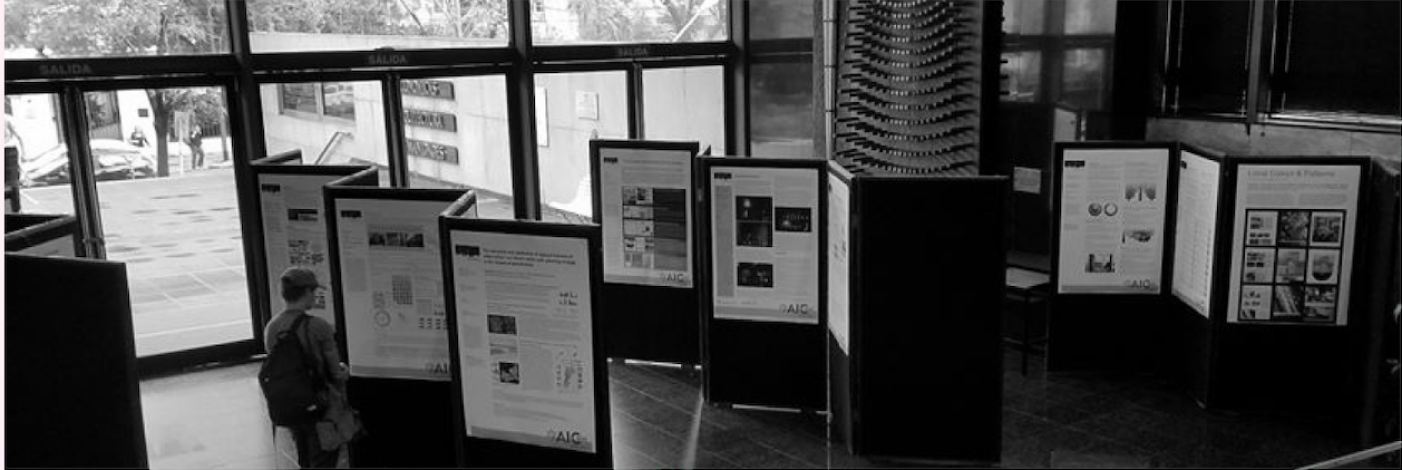
Published research — AIC Congress, Buenos Aires, Argentina, 2019
Origin
Cities that lost their colour
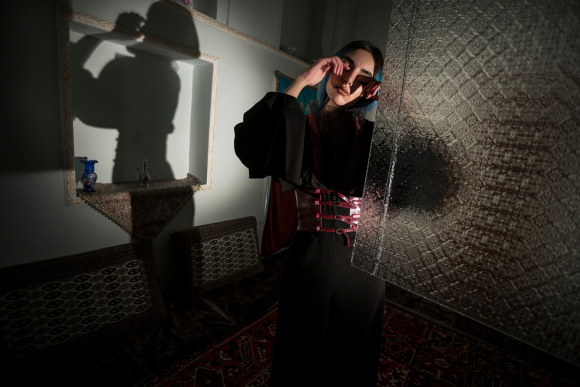
Modern Iranian cityscapes have become cloaked in gloomy, achromatic tones — black and grey — a sharp departure from the nation's vibrant cultural heritage. Historical literature confirms a traditional preference for rich hues and diverse colour patterns that once brought the streets to life.
This project explores that shift in Iranian urban fashion from historically vibrant, multi-hued palettes to the modern dominance of achromatic tones, and the disconnect it reveals between contemporary habit and traditional Persian aesthetics.
Process
Reconstructing a lost palette
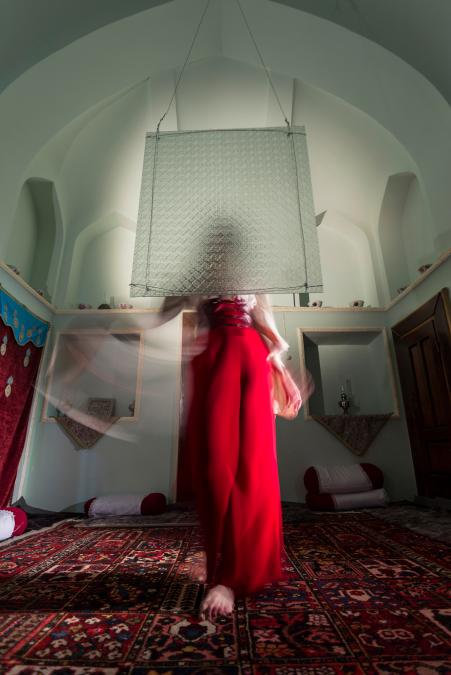
With limited documentation surviving from earlier periods, the research focused on the Qajar era (1789–1925) — the period with the richest available record: photographs, illustrations, and itineraries. Every colour in these images was pixelated to count coverage, then matched to an NCS colour code, and new clothing was designed using the palette this uncovered.

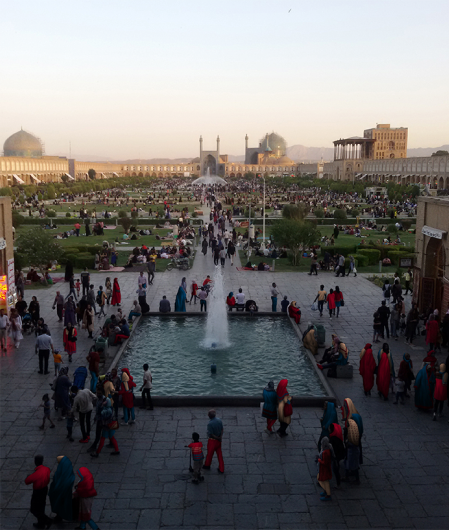
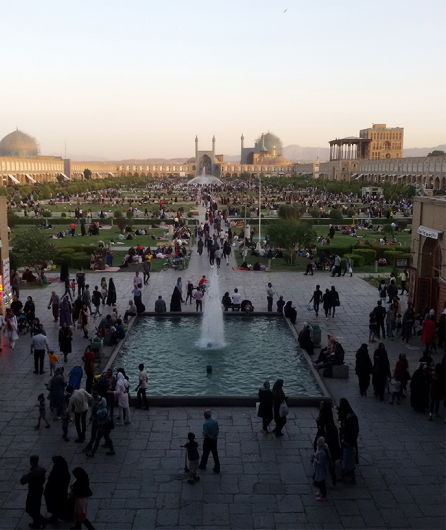
To test the effect, a photograph of Naghsh-e Jahan Square in Isfahan was shown to fifteen observers — once in its original, achromatic form, and once with the clothing recoloured using the research palette. Observers rated each version for joy, liveliness, and beauty.
Outcome
Measurably more joyful
The recoloured version scored higher across all three measures — joy, liveliness, and beauty. The research was presented as "Colours of clothing as a factor influencing the colourscape of cities" at the AIC (International Colour Association) Congress, University of Buenos Aires, Argentina, 2019.
AIC 2019 congress · Congress programme